A morning ritual. How to make a little room for yourself at the start of the day
The kettle is still boiling, and the day already wants something. Messages, breakfast, keys, a question from the next room. Before you leave home, it can feel as though you have been rushing for hours. It is hard to find a moment that belongs to you in a morning like this.
A morning ritual can begin right here, among these ordinary demands. It does not require a perfect wake-up or an hour of silence. It is a moment you choose to notice how you are and make one gesture with yourself in mind. Its shape can follow the life you actually lead.
Start with the morning you actually have
Before adding another activity, look at what already happens. When do you have a brief moment to yourself by the window, in the bathroom or in the kitchen? Which moment is available without taking time from sleep or someone’s care? Perhaps it is the walk to the bus stop, once the preparations at home are over.
Choose a part of the day you can truly reach. If you work shifts, your beginning might come in the afternoon. If you care for someone in the morning, your own moment may follow the first meal. The clock does not decide what that moment means.
Ask what you need today
Different days call for different beginnings. Before an important conversation, you might want to gather one thought. After a noisy evening, you may welcome quiet. If the morning feels lonely, a few words with someone close could be a good beginning. Your need gives the gesture its direction.
Try finishing this sentence: today, I would like to begin with a little… You might choose kindness, curiosity or connection. Then find a simple action that fits. Kindness could mean eating breakfast at the table without rushing. Connection might be greeting someone at home while giving them your attention.
Give one small gesture a meaning of your own
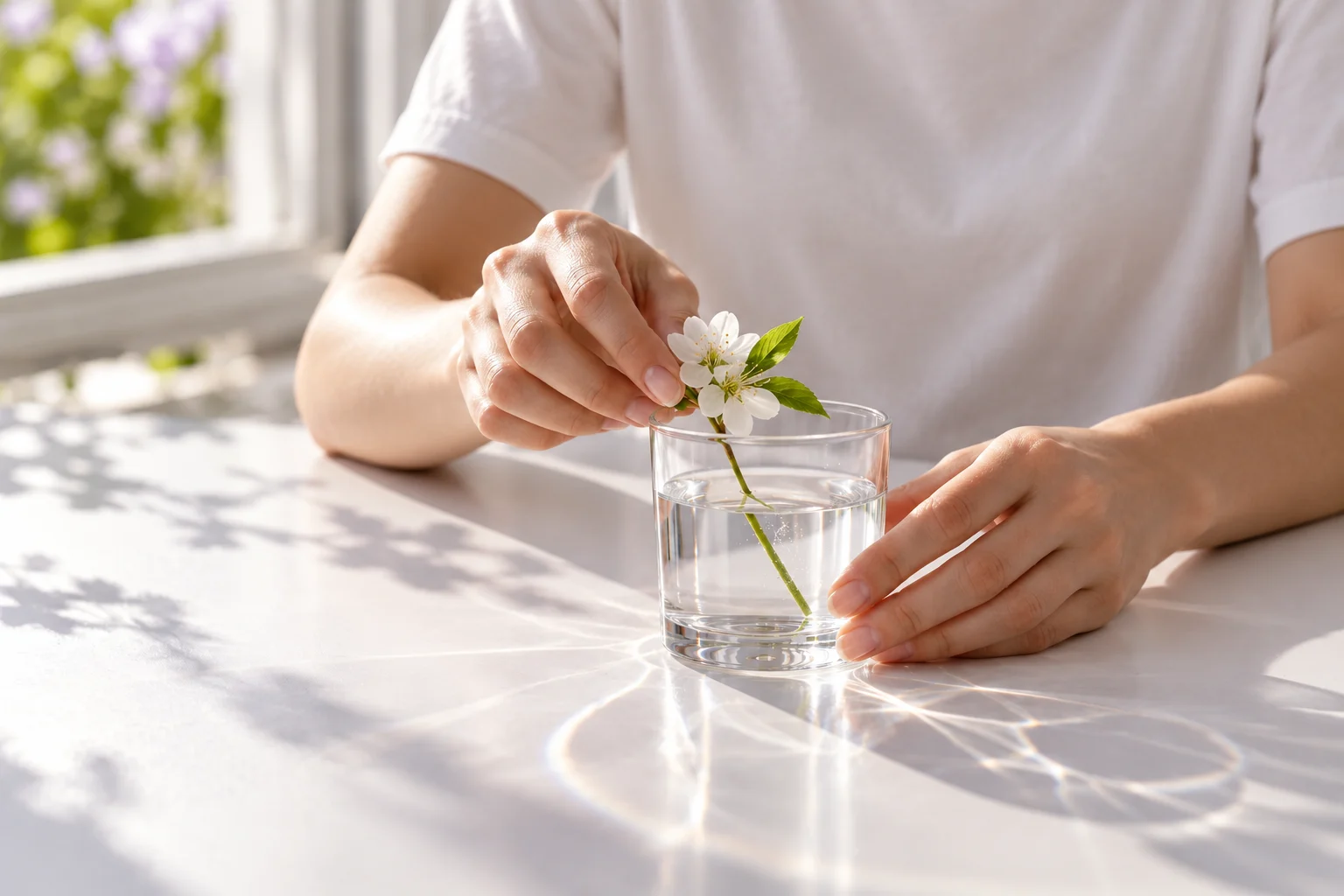
Think about opening the curtains. Usually, you do it without much thought. Tomorrow, you could pause with your hand on the fabric, look outside and consider where you want to begin. The movement stays ordinary, but it becomes your way of greeting the day. Nobody else needs to witness or assess it.
A short, personal answer to why can help: I am making room for myself before I start responding to others. Or: I want to notice a morning I would usually forget. At YĀNAMI, this meeting of attention and meaning is an invitation to celebrate the moment.
Leave room for different kinds of days
Make space for a version that fits a difficult morning. A few minutes at the window might become one look at the sky before you leave. A written note might become one question after washing your hands. A smaller gesture can carry the same meaning when you choose it for yourself. You could also have one version for a day off and another for a day full of responsibilities. Both can serve the same need, with a different place and amount of time.
When the ritual stops fitting, consider what has changed. Your schedule may be different; you may have less privacy or want company rather than quiet. Changing its form does not take away the value of earlier moments. It lets you carry their meaning into the life you have now.
This moment is for you

The next chapter is yours.
Give it meaning.
In your own way.
For a path whose direction you choose.
You do not need to know how the whole day will unfold to choose its next moment. Perhaps it is enough to notice that the day has begun, and that there is a place in it for you too.
Sources and inspiration
QUESTIONS AND ANSWERS
Worth knowing
How long should a morning ritual take?
As long as you can realistically give it. One unhurried moment within something you already do can be a useful beginning. You do not need to make it longer at the expense of sleep or essential responsibilities.
Does a morning ritual have to be the same every day?
You can keep its meaning while changing its form. If your intention is to check in with yourself, one day that might mean a short note and another day a look through the window and one question.
What if I spend my mornings caring for other people?
Look for an available moment between activities or later in the day. If you need more time, a conversation about sharing care and practical support may be necessary.